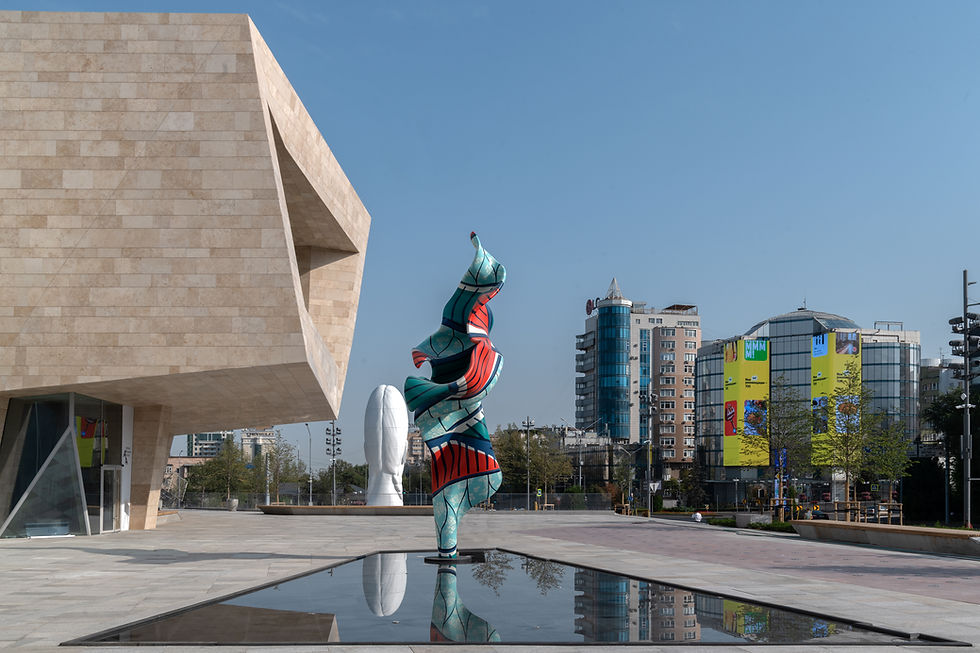
Wind Sculpture (TG) II
2022
Hand painted aluminium
Yinka Shonibare
1962, London
Wind Sculpture by British-Nigerian artist Yinka Shonibare

Будьте в курсе новостей
In front of the museum stands the eight-meter sculpture Wind Sculpture by British-Nigerian artist Yinka Shonibare commissioned by the Almaty Museum of Arts.
The surface of the sculpture is hand-painted to resemble Ankara cloth, often referred to as “Dutch wax.” Many think of it as authentically African, but its story is more complex. Originating from Indonesian batik, the fabric was adapted and mass-produced by the Dutch in the 19th century before entering Africa through colonial trade. By the mid-20th century, however, it had been embraced as a powerful symbol of African independence and resistance to colonial rule.
For Shonibare, Ankara embodies cultural exchange and the search for identity.
The form of the sculpture resembles a sail billowing in the wind. Sails have long been associated with trade and with the transatlantic transportation of enslaved people. Here, Shonibare reclaims that image, capturing wind as both a metaphor for freedom and a reminder of history.
In his studio, the artist experimented with fabric and a simple hairdryer, freezing the shapes created by gusts of air. Scaled up into heavy aluminum, the sculpture seems weightless, as though woven from air itself.
Standing at the entrance of the museum, Wind Sculpture greets visitors as a symbol of memory, resilience, and cultural dialogue.

