.jpg)
This autumn, ALMA, with strategic support from Halyk, will present its first joint project with Centre Pompidou, Paris, marking the beginning of a long-term partnership between the two museums.
I Understand Everything

Subscribe to our newsletter
This autumn, ALMA, with strategic support from Halyk, will present its first joint project with Centre Pompidou, Paris, marking the beginning of a long-term partnership between the two museums. Starting September 12, the video installation “The Clock” by Christian Marclay will be presented in the Al-Farabi Hall, being one of the iconic works of 21st-century contemporary art, it has never been shown before in Central Asia.
The project coincides with ALMA’s first anniversary and will be one of the highlights of the museum’s celebratory programme, alongside the exhibition of Kazakh sculpture “Müsinder.” For Almaty Museum of Arts, the project marks the beginning of long-term collaboration with Centre Pompidou, starting with the presentation of one of the key works from the French national collection.
“Presenting The Clock on the museum’s anniversary is our contribution to the cultural life of the city and the region, as well as a sign of our commitment to building international connections systematically. Our collaboration with Centre Pompidou is not a one-off initiative, but the beginning of a long-term story. We want local residents and guests of Almaty to have access to the finest works of contemporary art without leaving the country. We are grateful to Centre Pompidou (Paris) for making this work available, as well as to Halyk, our strategic partner, for making this possible,” says Nurlan Smagulov, Founder of Almaty Museum of Arts.
“For Halyk, supporting this project is a natural continuation of our long-standing strategy in the field of social investment. We have been systematically supporting culture and education for many years because we believe that these areas shape the future of the country. Projects of this calibre, such as The Clock at ALMA, integrate Kazakhstan into the global cultural landscape, and it is important to us that our bank is part of this process,” comments Umut Shayakhmetova, Chairperson of the Management Board of Halyk.
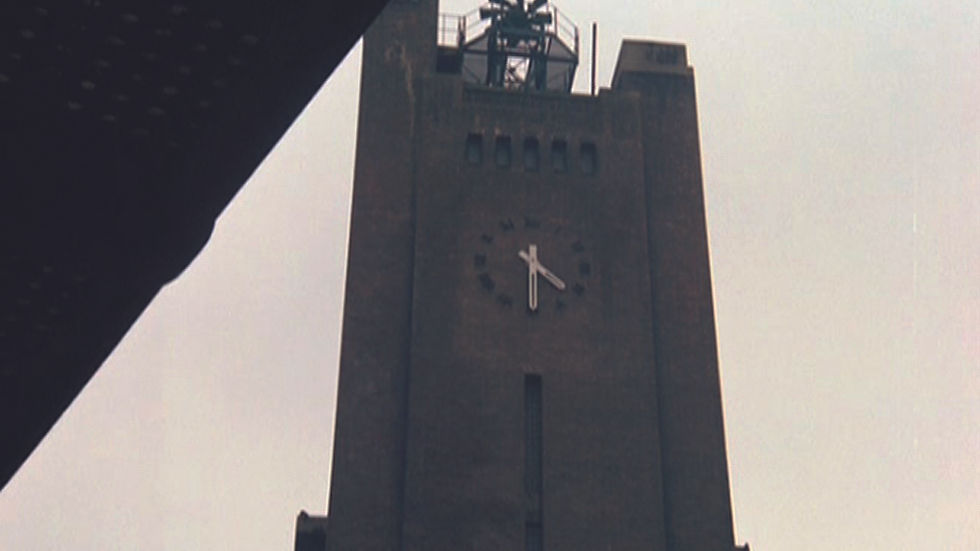
“The Clock” by Swiss-American artist Christian Marclay (b. 1955) is a 24-hour video installation composed of thousands of fragments from feature films and television programmes in which clocks appear or time is mentioned. All the episodes are edited and played back so that the time shown on screen corresponds to the local time at the place where the work is being presented. No matter which minute a visitor enters the gallery, the time on screen will exactly match real time.
Around the world, presentations of The Clock have become major cultural events of the season. Visitors may come for just a few minutes, but often stay for hours, returning at different times of day to experience how the rhythm, mood and dramaturgy of the work change along with real time.
The Clock is not an endurance test. I never recommend that people stay for the entire 24 hours. They should come and go as their schedule allows. The experience is shaped by the tension between the demands of everyday life and what unfolds on the screen. It’s not a film with a beginning and an end. There is no best time to watch The Clock, it's good whenever it's good for you, says Christian Marclay. The Clock is more like a performance in which you are one of the actors. It starts when you enter the space and ends when you leave. You make your own choices while being reminded that the time on the screen is the same as the time in your own life.
Bringing together scenes from more than a century of cinematic history, Marclay transforms cinema into a functioning timepiece. The constant shifts between genres, storylines and characters make time not only the recurring theme of the work, but also its main protagonist. First presented in London in 2010, the work received the Golden Lion, the highest prize at the Venice Biennale, the following year. Since then, it has become one of the best-known works of contemporary video art and has been presented at major museums around the world, including the Museum of Modern Art (MoMA) in New York, Tate in London, and Centre Pompidou in Paris.
“Synchronizing the time on screen with real time creates a unique experience that cannot be replicated in any other form of art,” notes Meruert Kaliyeva, Artistic Director of ALMA. “You enter the space, and the screen shows exactly your minute. This is the magic of The Clock: it makes the viewer not simply an observer, but a participant in time. For audiences in Almaty, this is an opportunity not only to see a masterpiece of global art, but to experience it here and now, and to feel how cinema becomes part of your own life.”

I understand everything, 1989-90s
Oil on canvas
Menlibayeva’s interdisciplinary practice spans a wide array of mediums, including painting, printmaking, video, photography, performance and textile. The artist often addresses the role of women and identity, ecology, energy and neo-colonialism. She also weaves in indigenous cosmologies and mythologies, providing a nuanced perspective on the region’s evolving identity.
The title I Understand Everything is inspired by Almagul’s early painting of the same name from 1989–90, which depicts semi-abstract images fragmented into grids. Its forms mirror the disarray of a collapsing system and the search for new cultural and political identities, and capture the sense of perplexity and uncertainty of the era caused by the economic hardships, social unrest and the urgent call for change.

Exhibition guide

Yerbossyn Meldibekov’s work Monument to the Unknown Hero

Exhibition guide
Bill Viola
Heaven and Earth, 1992
Two channels of black-and-white video on two facing monitors, two wooden columns
Continuously running
The video installation The Clock will be presented at Almaty Museum of Arts for one month, from September 12 to October 12, 2026, in the Al-Farabi Hall. On selected days, visitors will be able to experience the work in the format originally conceived by the artist — the installation will remain open to visitors continuously for 24 hours. This is a rare opportunity to encounter video fragments that would normally remain inaccessible during the museum’s regular opening hours.
24-hour screenings at the museum will take place on:
-
September 19
-
September 26
-
October 3
-
October 10
Work information:
Christian Marclay
The Clock, 2010
Single-channel video installation
Duration: 24 hours
The work was jointly acquired by Centre Pompidou (Paris), Tate (London), and the Israel Museum (Jerusalem) in 2012.
The exhibition unpacks how the artist tries to understand her own roots, socio-political, cultural, and economic, as well as the geo-political situation in Kazakhstan through her multifaceted artistic projects.
Curator Gridthiya Gaweewong


.png)
Halyk Bank is the Lead Partner of the Almaty Museum of Arts
Halyk Bank is the Lead Partner of the Almaty Museum of Arts

Artist
Christian Marclay (b. 1955, San Rafael, California) is a Swiss-American visual artist and composer. His practice explores the relationship between image and sound across a wide range of media, including video, sculpture, photography, and performance. Marclay is widely known for The Clock (2010), a 24-hour video installation for which he received the Golden Lion at the 2011 Venice Biennale.
Related events
Explore the collection with a guide
Tours
Every Sunday, free

Audio tour
Tours
Every Sunday, free
See also
Exhibition
Until August 9, 2026
