Museums and Cities of the Future

Conference
October 20, 2026
Art event in Almaty.
Bringing together museum directors, curators, architects, urbanists, educators and researchers from Spain and Kazakhstan, Museums and Cities of the Future explores how cultural institutions can participate in the transformation of contemporary cities. Taking Almaty as both a meeting point and a case study, the programme considers museums as civic institutions, spaces for knowledge and public life, and catalysts for new forms of cultural and urban development.
October 14, 2026
Дата для разметки
The event will be held in English with simultaneous translation into Kazakh and Russian.
Participation is free upon registration.
How can museums contribute to shaping the cities of the future?
Bringing together museum directors, curators, architects, urbanists, educators and researchers from Spain and Kazakhstan, Museums and Cities of the Future explores how cultural institutions can participate in the transformation of contemporary cities. Taking Almaty as both a meeting point and a case study, the programme considers museums as civic institutions, spaces for knowledge and public life, and catalysts for new forms of cultural and urban development.
Drawing on experiences from Spain and Kazakhstan, the conference will address museum architecture, cultural and educational infrastructure, and the changing relationships between institutions, publics and cities.
In preparation for the conference, students from InVision U will collaborate on the development of the Almaty Manifesto—an open and diverse set of propositions for the future of museums and cultural infrastructure in a changing city. The Manifesto will serve as a starting point for discussion during the conference and will evolve through contributions from its participants.
The conference is organized by the Almaty Museum of Arts in collaboration with the Embassy of Spain in Kazakhstan. As part of its commitment to international exchange and dialogue, the Almaty Museum of Arts convenes an annual international gathering dedicated to a key question shaping contemporary museum practice. The inaugural edition was organized in collaboration with Tate Modern and focused on performative practices; the 2026 edition turns to the relationship between museums, cultural infrastructure and the future of cities.
AGENDA
09:00–10:00
Guest registration, Welcome Coffee
10:00–10:15
Opening Remarks
10:15–12:30
Session 1: The Museum of the Future: Institution, Public and City
What role can museums play beyond collecting and exhibiting art? How can they operate as civic institutions, places of knowledge production and catalysts for cultural and urban transformation?
10:15–10:40
José María Luna, Picasso Birthplace Museum (Museo Casa Natal de Picasso), Fundación Unicaja
10:40–11:05
Julieta de Haro, CentroCentro – Building an identity, activating a city
What should a cultural institution know about a host city in order to define its role and boost its ecosystem? The experience of Madrid’s CentroCentro serves to explore how building a distinct identity can be the basis for a project that aims to reach beyond its walls.
11:05–11:30
Lucia Agirre, Guggenheim Bilbao – Guggenheim Museum Bilbao: Building a Future Through Culture
Bilbao is a city shaped by resilience, transformation, and community, where culture has become a powerful force for renewal. At the heart of this journey, the Guggenheim Museum Bilbao stands not only as an architectural icon, but as a symbol of collective ambition and cultural vitality. Its impact extends beyond the museum itself, inspiring education, creativity, civic pride, and a wider cultural ecosystem across Bilbao and the Basque Country. Today, Bilbao’s story demonstrates how investing in culture can strengthen communities, celebrate identity, and create a more vibrant and connected future.
11:30–12:30
Discussion and Q&A Moderated by Inga Lāce
14:00–16:50
Session 2: Building Museums, Building Cities
How can architecture, cultural infrastructure and education contribute to the changing needs of cities? What roles can new museums, adaptive reuse, educational institutions and new forms of cultural infrastructure play in Almaty’s future?
14:00–14:30
Juan Pablo Rodríguez Frade, Frade Arquitectos – Refurbishment of the National Archeological Museum of Spain
14:30–14:50
Asel Yeszhanova, Urban Forum – A museum is not an island. Almaty as a cultural ecosystem
What connections, networks and formats are needed for culture to become part of everyday urban life?
14:50–15:10
Adilzhan Psyayev – The Need for an Almaty Museum of Architecture as a Key Player in Urban Research
15:10–15:30
Coffee break
15:30–15:50
Jorge Rodríguez Donday, Frade Arquitectos – Architecture and Culture
15:50–16:10
Anel Kulakhmetova, InVision U – Who gets to imagine the city? Art, writing, and the education of attention
This talk explores how writing-based pedagogy, art and literature, and engagement with urban spaces can cultivate attention as a practice of critical inquiry. Understanding writing not simply as a means of expressing ideas but as a way of thinking, questioning, and discovering, it examines how young people learn to read the visible and invisible city, challenge familiar narratives, and imagine alternative urban futures. In the context of museums as civic institutions and catalysts for urban transformation, the question remains who gets to imagine the city of the future and how museums, working alongside educational institutions, can create opportunities for young people to become participants in shaping its cultural and public life.
16:10–16:50
Discussion and Q&A Moderated by Inga Lāce
Building the cultural city: what does Almaty need?
How can museums, educational institutions, architecture and cultural infrastructure collectively contribute to Almaty’s future?
16:50–17:30
The Almaty Manifesto and Closing Remarks
Presentation and discussion of the Almaty Manifesto, developed in collaboration with students from InVision U and conference participants.
PARTICIPANTS
José María Luna, Picasso Birthplace Museum (Museo Casa Natal de Picasso), Fundación Unicaja
José María Luna is an art historian with more than three decades of experience in museum management in Andalusia (Spain). He directed the Museum of Contemporary Spanish Printmaking in Marbella (1992–2003 and 2009–2011) and the Rodríguez-Acosta Foundation in Granada (2003–2009). From 2011 to 2024 he headed the Picasso Birthplace Museum (Museo Casa Natal Picasso) in Málaga, the house on Plaza de la Merced where Pablo Picasso was born in 1881. Created by Málaga City Council in 1988, the museum is dedicated to studying and promoting the artist's life and work, and its holdings exceed 7,000 works; it is also a research centre with a specialist library on Picasso. After the institution became a municipal public agency in 2014, he also took on the management of the Centre Pompidou Málaga and the Collection of the Russian Museum, both opened in March 2015. In recent years he oversaw the Birthplace Museum's new permanent display, unveiled in 2022, and sat on the inter-institutional committee of the Picasso Celebration 1973–2023, which marked fifty years since the artist's death. He is currently Director of Cultural Activities at Fundación Unicaja, the Málaga-based foundation with a network of cultural centres across Andalusia, where he directs its programme of exhibitions, concerts and other cultural activities. He is also a member of the Royal Academy of Fine Arts of San Telmo in Málaga.
Julieta de Haro, CentroCentro Madrid
Julieta de Haro is a cultural manager and curator with more than 25 years of experience. Since 2024 she has been Artistic Director of CentroCentro, Madrid City Council's cultural centre housed in the Palacio de Cibeles, the city's town hall. Under her direction it was relaunched in January 2025 as a contemporary art centre focused on artists working in Madrid; in 2025 it staged fourteen in-house exhibitions with over a hundred artists and drew nearly one million visitors. She shapes its programme of exhibitions, artist residencies, concerts and public activities, and also advises on the exhibition programme of the Centro Cultural de la Villa Fernán Gómez. For eleven years she directed AVAM (Associated Visual Artists of Madrid) and the national association AVeR at Matadero Madrid, where she drove projects such as the Talleres AVAM production and residency centre, as well as international collaborations with partners including the Berlin University of the Arts (UdK) and the Spanish Embassy in Berlin. She has also worked with the Círculo de Bellas Artes, the Atlantic Centre of Modern Art (CAAM) and VEGAP, and has curated exhibitions for venues run by Spain's Ministries of Culture and Foreign Affairs, among others. In 2016 she founded El Tercero de Velázquez, an independent exhibition space in Madrid that brings together artists, collectors and the public.
Juan Pablo Rodríguez Frade, Jorge Rodríguez Donday, Frade Arquitectos
Juan Pablo Rodríguez Frade is an architect and founder of Frade Arquitectos. He graduated from the Madrid School of Architecture (ETSAM) in 1983 and ran his own practice for more than two decades before founding Frade Arquitectos in Madrid in 2005.
Jorge Rodríguez Donday is an architect and director at Frade Arquitectos, representing its second generation.
Frade Arquitectos specializes in museums, cultural heritage, exhibition design, and civic buildings. The studio has designed more than 300 exhibitions and has collaborated with institutions such as the Centre Pompidou, the Thyssen-Bornemisza Museum in Madrid, and the Kulturforum in Berlin. Its most notable projects include the complete renovation of the National Archaeological Museum of Spain, the House of Architecture in Madrid, and the museography of the Al Batha Museum of Islamic Arts in Fez, Morocco, which reopened in 2025. In Kazakhstan, the studio designed, together with ACCIONA, the Spanish Pavilion at Expo 2017 Astana, under the motto "Spain, Energy for the Planet."Rodríguez Frade received Spain's National Prize for the Restoration and Conservation of Cultural Heritage in 1995 for converting the Palace of Charles V into the Alhambra Museum. With Nieto Sobejano Arquitectos, the studio co-authored the exhibition design of the Madinat al-Zahra Museum in Córdoba, winner of the Aga Khan Award for Architecture (2010), the Piranesi Prix de Rome (2011), and the European Museum of the Year Award (2012).
Lucía Agirre, Guggenheim Museum Bilbao
Lucía Agirre is a long-time curator at the Guggenheim Museum Bilbao. Since joining the museum in 2000, Agirre has curated and co-curated a wide range of critically acclaimed exhibitions featuring leading modern and contemporary artists. Selected exhibitions include Inhabited Architecture (2012); Garmendia, Zabala, Maneros, Salaberria: Process and Method (2013); The Art of Our Time: Masterpieces from the Guggenheim Collections (2014); Jeff Koons: A Retrospective (2015); Francis Bacon: From Picasso to Velázquez (2016); Pello Irazu: Panorama (2017); Bill Viola: A Retrospective (2017); Chagall: The Breakthrough Years, 1911-1919 (2018); Olafur Eliasson: In Real Life (2019); Lee Krasner: Living Colour (2019-2020); Alice Neel: People Come First (2021-2022); Serra/Seurat: Drawings (2022); Yayoi Kusama: 1945 to Now (2023); Yoshitomo Nara (2023-2024); Hilma af Klint (2025); and Picasso Sculptor: Matter and Body (2025), among others. Her curatorial practice combines scholarly research, collection-based investigations, and close collaboration with artists, lenders, museums, and international cultural institutions. Agirre holds a Bachelor's Degree in Geography and History from the University of Deusto (Bilbao, Spain). She further specialized in Museology and Art Criticism at the Università Internazionale dell'Arte di Firenze (Florence, Italy) and earned the qualification of Tecnico Qualificato in Gestione di Musei e Pinacoteche from the Tuscany Regional Government (Italy).
Asel Yeszhanova, Urban Forum Almaty, Urban Forum Kazakhstan
Asel Yeszhanova is an architect, curator, founder and driving force behind Urban Forum Almaty and Urban Forum Kazakhstan. She previously worked for the international firm Aedas Architects and headed the Almaty branch of the architectural studio Atomik Architecture, designing projects in the UK, Europe, Canada and the Middle East.
Anel Kulakhmetova, InVision U
Anel Kulakhmetova is a provost and director of the Public Policy and Development programme at InVision U. She previously worked as a national consultant on child protection and children’s rights at the United Nations Children’s Fund (UNICEF Kazakhstan). Since 2014, she has been teaching courses on international development, academic research and academic writing at the OSCE Academy in Bishkek, SDU University and Narxoz University. Since 2023, she has served as Director of the School of Arts and Social Sciences Humanities at Narxoz University.
Adilzhan Psyaev
Adilzhan Psyaev is an architect and researcher specialising in the history of architecture and urban planning in Almaty. His work focuses on unrealised and historical architectural projects from the Soviet period. He is an expert on preserving the city’s historical character and collaborates with platforms and initiatives dedicated to urban development as a partner and expert. He also contributes to discussions on design codes and urban development concepts across Kazakhstan.
More events
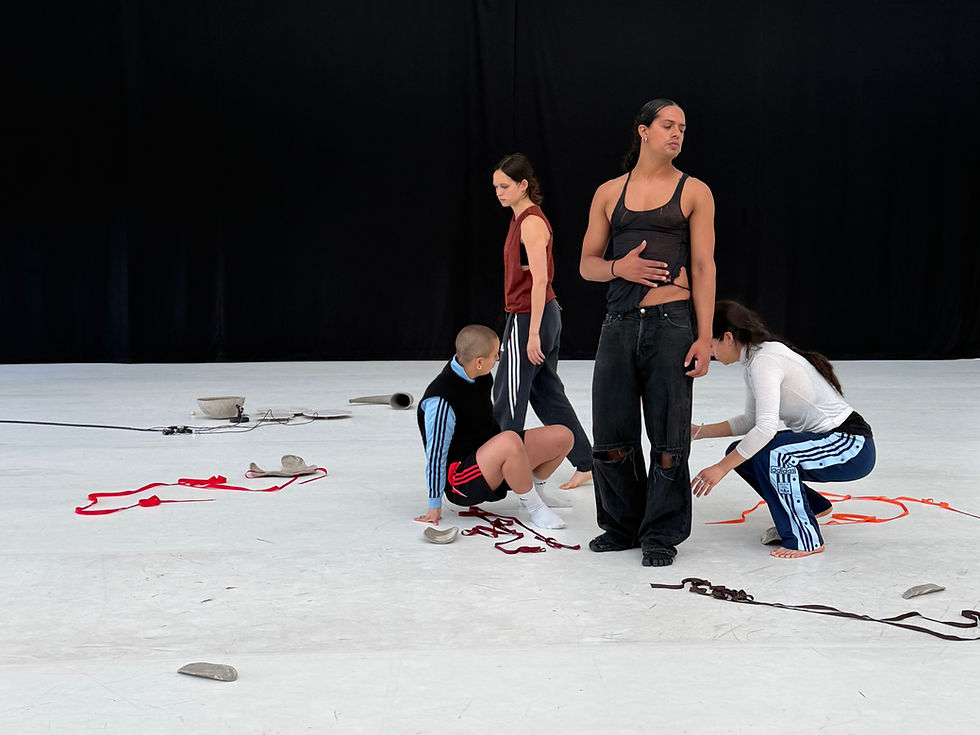
Ula Sickle
Clay Bodies (study)
Performance
October 14,
17.30 – 18.20
.jpg)
Craft Night
Monthly craft club
October 20, 2026
6:00-8pm (anytime)
.jpg)